The founders of method—a trendy and wholesome cleaning product brand—Eric Ryan and Adam Lowry, started with next to nothing. After growing up together and losing touch during college, Ryan and Lowry bumped into each other on a cross country flight in the late 90s. Shortly after reconnecting, they came up with the idea of starting a new line of cleaning products. These products would be green and stylistically interesting. While one business partner had a passion for sustainable, clean, “green” products, the other had an eye for unique design so they combined the two. Taking off wasn’t easy for Ryan and Lowry. They each invested $45,000 at the start and quickly spent through the money. They eventually had to turn to family and friends. Ryan said he encourages entrepreneurs to take money from family and friends because it’s an even bigger motivator to find a way through the tough spots.
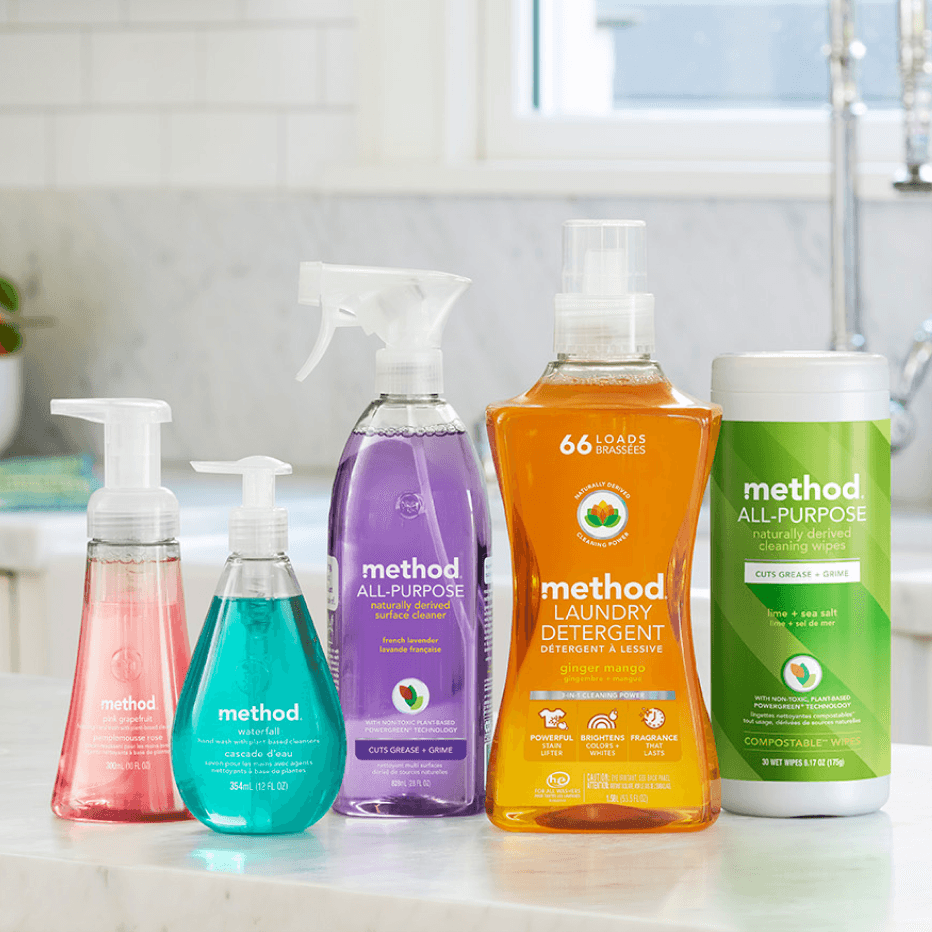
Their idea was to create a cleaning product that people didn’t want to hide under their sink. They wanted it to be on display. They also wanted the products to be safe and healthy for users. They mentioned that people actually pollute when they clean because of the toxic components of typical cleaning products. It didn’t have to be this way. Lowry said “there is no such thing as low interest categories, just low interest brands.” This was the reasoning behind their odd and seemingly niche idea.
After figuring out what their soap and surface cleaners would be made of—safe products you can buy off of the shelf at any grocery store—they turned to the design. When surveying the products that tons and tons of manufacturers made, they weren’t finding bottle designs they liked. Lowry had a camping water bottle from Norway that had a clean look, almost resembling a vase. They took this to a manufacturer and had it made. These custom bottles used up almost of the funds they had. This didn’t matter though, they believed that their packaging would be their primary marketing vehicle.
Once they were able to make their way into a dozen local stores in the Bay Area, it was time for them to make it bigger. They were able to partner with one of the top industrial designers in the world, Karim Rashid, and their product was put on shelves in 90 Target stores as a test run. While they didn’t meet the numbers Target wanted them to sell, they were bringing in Target’s ideal segment of customers—young, trendy, dynamic people. This was enough to get them the full Target deal and from there they grew. They still encountered a few bumps in the road but they made it through and eventually sold their company in 2013.
I think my biggest takeaway from listening to this podcast was the need for the ability to be flexible as an entrepreneur. You have to be open to your ideas having flaws, you have to be vulnerable and take funding wherever you can get it, you have to work the long hours and endure the stress. Ryan and Lowry said something they became really good at was finding workarounds when they had doors shut on them. That is was kept them going. They also mentioned that often times, people will not necessarily believe in your product but they will believe in you. This is something to take advantage of and let propel your brand.
I did expect to hear about all of their roadblocks, I think this was kind of a typical start-from-the-bottom story. However, they just had a really good idea. It hadn’t been done before and they had big competitors which made it hard, but if you look to the market today, there are like 10 other methods on the shelves. Methods as in different brands with the same idea behind them.
Ryan and Lowry said in the beginning of the podcast episode that their goal was to “disrupt the industry.” This stood out to me because I think that’s the best way to be successful. I remember hearing in an art history class that the art that becomes famous and worth the big bucks is the art that people find absolutely ugly in the beginning. This is because no one has ever done it before and our eyes haven’t seen it yet. This feels very similar to method’s strategy. Make a splash with an essential but do it in a way no one is expecting. A “green” product that works and looks good, while it’s doing its job. I’m on board with their method, no pun intended, and enjoyed listening to this podcast about a brand I really love.
 Ruthie's Writings.