Trying to Think if I’m Really the Thinker

I was deemed the Thinker by the Adobe My Creative Type quiz. This personality type is defined by deep thoughts and big questions. The creative strengths of the Thinker are intellectual curiosity and the ability to find and create meaning. The Thinker is all about learning more and finding truths. I think this is true for me to a certain point. I like to learn about certain things but I would not say I am one of those people who are eager to learn about everything. I know what interests me and I usually stick to that. I would say I am a truth seeker. I am a very truthful person myself and I am interested in the truth about others, as well. 

The Thinker also seems to be characterized by enjoying lots of time alone. Although I do love my alone time, I am a definite extrovert. When it comes to my creativity, I prefer to be around others. It inspires me more, gives me better ideas, makes me more excited. When I’m alone and trying to channel creativity, I feel like my thoughts go in circles and I can never come up with anything other than the first idea I had. It’s a good thing interest exists, though!

My ideal collaborator is the Adventurer. This feels ironic to me because I’m really not a huge risk-taker. I think I would blend well with someone who takes the lesser beaten path and really thinks outside the box. I can produce really different work if I try, but it isn’t often what pops into my mind at first. I like the idea of working with the Adventurer to brainstorm and bounce ideas off each other. 

The Thinker fits about half of who I am. I am inquisitive and enjoy learning about other people. I think the truth-seeking aspect is truer of me than I tend to realize. Overall, I might have been being a little modest when taking this quiz. I don’t tend to think of myself as an innately creative person so maybe that’s why I was being a little reserved and cautious when making choices. Regardless, I thought it was a fun exercise. I am always happy to take a personality quiz! 

Let’s Try It!

I have always been very interested in the idea of entrepreneurship. It used to be that I wanted to open a store or start a company. Now, my mind has shifted to thinking in terms of beginning a brand. It’s a lot to wrap my head around, though. I need a succinct vision with a meaningful purpose. Before that, I have to start with an idea. According to the first chapter of “Media Innovation and Entrepreneurship,” my idea needs to be conceptual, market-driven and fit for a target audience.

Although I realize how true it is that to make a splash you need to be innovative, different and resolute, it feels so daunting to come up with something that fits all of those descriptions. According to the text, an entrepreneur is engaged in creating, innovating, monitoring, measuring, tweaking and pivoting. This is a lot to keep in mind when developing a brand or product but it makes sense. Your brand or product needs to be unusual to your target market. Once it’s out there you have to track it’s progress and be willing to make necessary changes if something isn’t working. Again, this feels so daunting.

This is all just to say I learned a lot about what it takes to be a successful entrepreneur and it seems a little bit difficult. It definitely takes the right person with the right mindset. I’m not saying I can’t get there but right now it feels distant from me. At this point in my life, I feel like I would be more of an intrapreneur than an entrepreneur. I think beginning in a space where I can develop within an existing system rather than creating my own, sounds a lot more attainable. 

Photo by Gaelle Marcel on Unsplash


Something I read in the text that can help me on my journey to becoming an entrepreneur or intrapreneur is the notion of “We don’t know what will happen… but let’s try it.” This can become a mantra to help myself and other young people recognize there will be failure in the process of innovation and that it’s OK. It’s a necessary step in coming out on top. It’s a commitment to myself, my curiosity and my future.

Flywheel Shows us How Content Marketing is Done!

Flywheel - Home | Facebook
By Flywheel from Facebook

Content marketing is a form of marketing that is used to draw in a company’s intended audience. Content marketing is not always explicitly in line with a certain organization, but it typically aims to inspire someone to want to use an organization’s product or services. An example of content marketing would be an infographic on how to get better sleep that was made by a mattress company. The infographic may share the same colors, fonts, or design elements that the mattress company uses in their promotional marketing or on their website, but it probably won’t say the company’s name. 

Flywheel is a local Omaha company that provides managed WordPress hosting for designers and agencies. Their website says their services are “solutions for busy creatives.” Essentially, for $13 a month Flywheel will manage the crucial background pieces of your website if you provide the design. They will make sure your site stays up-to-date, secure, fast and accurate. 

Besides providing these services, Flywheel creates a lot of very effective content marketing. Under the resources tab on their website, there are lots of free resources for website people and creatives that can help them do the things Flywheel does, but on their own. At first you see a series of eBooks with titles such as “7 Services You Can Sell to Skyrocket Your Revenue” and “The Business of Web Design: The 2020 Report.” When you click on a specific one, they give you an overview of the book and explain the facets of what is included but you have to provide your email in order to access the entirety of the material. Next, they promote a free Agency Partners Program with a large “learn more” button. This program will help you with revenue generation and long-term success. Next, there is a video library that provides free courses on selling WordPress maintenance plans and pricing. They also have more company specific videos that are interesting and lighthearted which show Flywheel in three words or performance insights for their company. Next they have blogs that tell you about “the latest from layout.” Finally, they provide “help articles” and additional resources all related to the things that Flywheel does. They are trying to help you have the ability to do this on your own but know that you will ultimately need their help and it’s probably easier when put in their hands. 

Flywheel’s Instagram account, @heyflywheel does a lot of promotion for their content marketing. Their most recent post asks you if it’s time to raise your prices and provides infographic like images that the viewer can swipe through. There’s a link in their bio that leads you to more pricing tips and tricks. They have another post that uses an infographic approach and tells you seven things you should be billing your clients for. This type of content continues consistently throughout their very beautifully and carefully crafted Instagram page. 

Flywheel’s Twitter uses similar tactics to Instagram and provides a lot of the same content. They promote their free courses a lot more on their Twitter than their Instagram. A recent tweet says “Do you feel confident in how much you’re charging for your web design services? If you hesitated, even for a moment, have we just the resources for you.” Then they provide a link to their free Confident Pricing workshop. Their blog is also promoted and linked many times on their Twitter account. 

Flywheel’s Twitter posts don’t tend to get a ton of engagement but on Instagram most posts get between 60 and 110 likes. Video content on their Instagram receives thousands of views, however. The content marketing posts fall in line with these trends but tend to get on the lower end of the like range. Their social media content does a great job of matching their audience because all of their media follows the same format and theme. They have a fantastic aesthetic going for them. Flywheel’s content marketing is completely evergreen because these needs within companies are not going to dwindle. I can only see Flywheel’s content growing in necessity because of the increasing competition and need for innovation we see in our world, today.

Flywheel does an absolutely excellent job of providing effective, useful, and well-curated content marketing to its audience. They are very educational, brand-centric, and fun! I imagine Flywheel gets a lot of engagement because of their content marketing which is exactly the purpose of creating it. They provide a variety of sources which is key, and they make sure that they are consistent on social media posts that keep people up to date with what they have to offer. Flywheel was an excellent choice for a company to examine for content marketing. If anything, their cute and colorful branding makes me want to look further and the resources they provide are a very helpful tool for doing so! 

Beating the Caption Beast

Instagram captions are hard. We can’t sugarcoat this. Every time I or one of my friends sits down to post a picture there’s a lengthy conversation about “what should I caption it?” If you don’t have to go through this, then you should consider yourself lucky! 

Alyce Greer of The Bossy. Type podcast agrees just the same about the troubles of Instagram captions. In her episode called “Instagram Caption Formulas. Here to Save Your Ass.” she details formulas for writing Instagram captions and why we need them. Along with being Instagram-caption-savvy, Alyce is a writer, director, and fashionista who knows how to build a strong brand. 

Instagram captions can make or break a post and that’s why they are so important. There is nothing better than seeing a beautiful photo with a “carefully curated caption” right beneath it. Having formulas for Instagram captions can do a lot for us as evidenced by Alyce. I am going to tell you why we need them and how to use them. I learned a lot from this nine-minute episode, and I hope to sum it up nicely for you here!

person holding phone
Photo by Kate Torline on Unsplash

The formula types that Alyce promotes make it so that as the writer, you don’t have to do a lot of work. She compares these formulas to a recipe, but the cheap kind that you get online rather than the expensive ones from a cookbook. These captions are effective and delicious but take barely any time or effort. So why do we need these formulas?


  1. They can eliminate stress. It’s the biggest bummer when we have the perfect picture to post and are so excited to do it but then sit down and have nothing to say. This can be stressful, too, especially if you are posting on a deadline.
  2. Formulas save time! Knowing how your caption will play out makes it so that with the replacement of a few words and some new emojis, your caption is good to go and you can move on with your day.
  3. They bring variety. Having a set group of captions choices allows you to be sure that one day’s post is not the same as the next. Being able to choose from a library of formulas is likely to give you more options than if you were thinking on your feet.
  4. Formulas promote consistency for your brand. Despite the variety that it can bring, if you only use a set of five different formulas, you will have defined how your Instagram captions work and you will have built a brand that your audience can expect.

Knowing that formulas can bring us ample benefits, we have to know what they are and how to use them. Alyce’s first step is to create content categories for your brand. For example, if your account is about fashion your categories might be outfit of the day, style tips, product promotion and accessory pairings. Alyce says you can assign one formula to each category, if you want. Otherwise, just switch it up each time.

The next step is brainstorming how you want your captions to look and sound. You have to keep your brand and the content you post in mind. One way to boost brainstorming is to look at the captions of other brands you like or your competitors. Once you have done this; you create your set of formulas and you’re ready to crush it on Instagram.

Formulas can look very different from account to account, but I will outline a couple of examples that Alyse talks about in this episode. A content category for a nutritionist might be ingredients. For each post that highlights an ingredient, your formula could be that you start by naming the ingredient and then putting an emoji next to its name. Then you outline health benefits of the ingredient followed by your favorite way to eat it. Another formula is to caption a post with only one word. For example, a wedding photographer takes pictures that do the talking. These images can be accompanied by one really strong word in the caption. Finally, another caption formula is to tell a story. Every few posts, this can be a really engaging tactic.

Overall, I think Alyse’s idea of caption formulas would work a lot better for a brand than for someone like me who uses Instagram personally. Nonetheless, her tips should not be overlooked because they offer useful and practical information. As I said, captions are HARD, why not take some tips on making them a little easier for yourself!

Only One Sentence…

white switch
Photo by Ruffa Jane Reyes on Unsplash

How to explain me in one sentence… I thought I knew myself but this is making me rethink everything! 

Like most people, I am a multifaceted human being. Coming up with one single sentence to describe myself is an obvious challenge. 

It feels like I could take my sentence in so many directions…

Should my sentence reference my family? Should my sentence reference who I am socially? Should my sentence be about me in a work or school environment? Should I reference my hobbies? Strengths? Weaknesses? Physical appearance? 

Then again, it shouldn’t go in any direction at all. It should be a roundabout answer that touches on every part of who I am. There are so many parts of me to consider and it’s difficult to mesh them all precisely. 

In order to do this right, I need to break myself down. 

Family is a huge part of my life. It’s not really a choice, I just have a lot of family and they’re always around. Don’t get me wrong though, I love it. I am the oldest sibling, too. I think that is a very defining part of who I am. I am mature, responsible, and a natural leader. 

As a social being, I love to meet new people and learn about them. I value my friendships immensely and I wouldn’t trade them for the world. I can be reserved at times, but my friends are the ones who bring me out of my shell.

I am also a very professional and consistent person. I thrive off of making lists and I typically enjoy keeping busy. Once I say I will do something or set my mind to something, I’m going to do it. I follow through and I always show up. I aim to please those in my work and school environments. I like to help, collaborate, and impress. I hold myself to a very high standard in these atmospheres as well. 

Hobbies have always been kind of a tough thing for me to put my finger on. I really love clothes and food and music and writing in a journal but none of those have a distinct name. It’s not like painting or running. I do love to do things, though. I guess my hobbies just feel more like everyday phenomenons to me. 

My strengths are that I always do my best, I am steadfast, I am an achiever, I maximize, I am caring, and I am a people person. My weaknesses are that I have a hard time with unfairness, I have perfectionist tendencies, I overcommit myself, I have a hard time holding something in if it bothers me, and I worry a lot about what other people think. That part holds me back from being me more than anything.  

I suppose my physical appearance is that I am 5 feet and 7 inches tall with straight, medium length hair. My hair is brown and my eyes are blue. I am usually wearing jeans and sneakers. I don’t wear a lot of makeup and my skin stays very pale, even in the summers. 

So now I need to pull all of this together. I guess what I have learned is this:

Though I can be hesitant, I always go for it. 

Despite my overthinking and fear, I am passionate and motivated. It is clear that I take many ventures in life. Sometimes I overthink things, but I usually just try them anyway. There’s a lot I hope for in my life and I’ve learned that the best way to get them is to put myself out there. That’s probably the best thing I’ve ever taught myself to do, put myself out there. Sometimes, things don’t go as planned, and that’s tough, but the things that have gone right can serve as motivation to keep moving.

My Take on All Things Social Media

Photo by Merakist on Unsplash

Social media is a large part of my everyday life, so much so as I barely even think when I use it. Clicking on the apps is a part of my muscle memory and those apps are probably 75% of the reason I use my phone. Regardless of the habitual nature my social media usage has, I find it very captivating and absolutely pertinent in today’s world.

Whether it’s to keep up with friends and family or world news, I have an account on nearly every social media platform. The main sites I interact with are Instagram, Snapchat, Tik Tok, Pinterest, Twitter, and Facebook. Instagram, Snapchat, Tik Tok, and Pinterest are used mostly for my own gratification. I really enjoy staying up to date with my friends, celebrities, and trends, too. Facebook is most commonly a means for me to stay connected with my family. Finally, there’s Twitter… Despite many popular opinions, it’s not my favorite. I have never enjoyed the layout, can’t choose who to follow, and haven’t really found my niche on the app. Nonetheless, I find it necessary to use Twitter in much of my daily life so I check in on it a couple times a week. It provides a plethora of up-to-date, vital news, especially in today’s social and political climate. 

Over time, I find myself more and more disappointed at the content I find on most of my apps. I feel like all of my social media accounts are flooded with ads and it’s so difficult to see through to the content I’m there for. This tends to muster an apathy inside of me when I’m scrolling through pages. 

The ad content becomes even more frustrating when I realize the ad I’m seeing of mac and cheese is because my friends and I were debating earlier about which brand is best. There are serious privacy issues that must be kept in mind by social media users. It used to feel like a myth that our phone could be listening to us but now, it’s way too plausible to deny. 

During my time as a journalism student, I have learned many of the ins and outs of safety on social media. There is a lot to look out for like data collection, location monitoring, and ad targeting. Although there is risk involved, we make a choice to continue our social media engagement. Why? Well, it’s a powerful tool for promoting, news sharing, connecting, educating, and selling products. It’s a tool with competence that can’t be found in many other places. 

Throughout the course of this semester, I hope to gain knowledge of how to effectively use these apps for my future career. As I mentioned, I find social media captivating and an excellent tool for promotion and marketing. I hope to work with these kinds of tasks in the future and knowing particulars of the way social media functions will boost me in the right direction.

Yes, Fake News is Bad. No, Fake News is not Scary.

Photo by Markus Spiske on Unsplash

Fake news… you hear about it, you talk about it… and at some point, you’ve probably consumed it. Clearly, news is a sticky situation in our world today. It’s nearly impossible to find a non-partisan source, we are averse to anything that doesn’t align with our beliefs, and it’s difficult to tell whether something is truth, or not. Fake news is typically created to misinform others and sway them to think or feel a certain way about a topic, candidate, or even a current event. 

There are many reasons that fake news is so prevalent and its prevalence is not slowing down. First and foremost it is important to realize that fake news penetrates deeper than truth. People are more interested in the juicy headlines that tell raunchy lies about political candidates than the banal and seemingly repetitive headlines about the economy or foreign trade. Think about yourself in this situation, what would you really prefer to read? And what would make you click faster? The other problem with fake news is that it is a driving force behind the revenue generated for online news sources. Online news sources rely on increasing amounts of traffic on their websites and articles in order to grow their income. The point here is that people will produce articles that they can guarantee will captivate your attention and in turn, make them a profit. Most of the time, these attention grabbing articles promote falsehoods. One foundational step in combating fake news would be to create news platforms not entirely driven by money.

Another way to help yourself combat fake news, on the daily, is to understand verification and make it a part of your media consumption routine. In the past, verification was the duty of librarians and editors, but today, it is the duty of all of us. We must practice a healthy skepticism when observing the news so that we can be sure we are reading and viewing the most authentic and true content. Some factors to identify in the verification process are provenance, source, date, and location. The provenance of a news piece tells us whether it is an original piece of content and if not, we look for the real source to know if the creator is truly qualified. Knowing the date will help us know if this is true current news or if things could have changed since this story was uploaded or written. We want to know location because if an article was written overseas about a local American current event, it may not be as reputable. Furthermore, we should consume a wide variety of news on both sides of the political spectrum, we should ask questions of the stories we read, and we must remember that sometimes, fake news is not on purpose. Oftentimes, fake news grows out of other fake news stories, not out of cynicism. Keeping these qualities in mind while taking in the news will help us to be better informed citizens. 

An article by the Pew Research Center states that the people who do best at accurately pinpointing fake news are highly politically aware, digitally savvy, and place high levels of trust in the media. We should consume broad ranges of news to educate ourselves on the entire spectrum, we should know how to verify and understand the ways of the internet, and finally, we absolutely cannot let the notion of fake news scare us away. To be the best news consumer we can be, we need not be afraid. Like I said before, a level of healthy skepticism is optimal but we have to be able to trust as well. We are not living in a post-truth era, we are living in a post-trust era. That is our own fault. We can’t control the way others tell the truth, but we can control the ways in which we trust.

Obviously fake news is a problem. The job of cleaning it up lies in the hands of us, the people of my generation. I have mentioned some tactics that may play key roles in refining the true versus false content we see, and being better able to tackle any piece of content and determine its motivators. However, at the end of the day, I believe the largest reason for our “fake news era” is because we let is get to us. If we stand our ground, verify what we see, and don’t shy away from news that may seem treacherous, we can take down this “fake news era” with the snap of our fingers.

Public Relations… and basically all of my thoughts on it

Photo by Tim Bennett on Unsplash

Public relations is formally known as the strategic communication process that builds mutually beneficial relationships between organizations and the public. In my own words, it’s the crucial job of creating strong bonds between a company and its potential connections in an effort to build and maintain the most attractive face for an organization or brand. Though the overall intention of public relations has remained over the years, the methods of getting there have changed notably. In the past, public relations relied on third-party endorsements to help share information about their product, client, or organization. This process was effective but because information was relayed through a third-party, not the organization itself, there was risk involved. The organization had less control over their exact message to the public. 

Today, the approaches to public relations differ greatly. The P.E.S.O. Model outlines the main modes of public relations tactics. P stands for paid media. This involves paying another company to endorse the product or client that a public relations specialist is working for. This usually involves taking out an ad or paying for a sponsored social media post and it relies heavily on the level of impressions and frequency it receives. An added bonus to this method is that it provides analytics on the traffic surrounding their ad or post. This helps them know how to move forward. E is for earned media and this refers to the most traditional way of public relations. Earned media functions like all of public relations did in the past by relying on a third-party endorsement. In this case, another source shares the story for the public relations company. S stands for shared media which refers to media shared through social media, word-of-mouth, or referrals. An example of this would be a retweet on Twitter, a shared article on Facebook, an in person recommendation or even a Yelp review. Shared media can be effective when it reaches the correct crowd and spreads in an efficient and transparent way. Finally, O is for owned media. Owned media refers to the communication channels that a company owns and operates, like a website. This is beneficial to the company because they completely control the narrative. However, this can be seen as less reputable to the audience because the company may have a bias. The fact of the matter here is that if a company builds credibility with the audience, owned media benefits both parties.

It is true that public relations has withstood the test of time and I believe this will continue for years to come. However, public relations will have to continue to develop overtime to fit the preferences of the people. Public relations writing is one thing, but it is becoming increasingly important to make the writing relevant and attention worthy to the public. The structure of public relations needs to become consumer focused. Content should be condensed with a greater amount of visuals because this is what the modern attention span has time for. Public relations should use the power of analytics to its advantage but remember to keep an honest and educational motive behind their work. 

Overall, I think I had a solid general idea of the workings of public relations but learning these qualities has been an invigorating experience. I look forward to embarking on the journey of public relations as it is my goal to work within this field. My intent is to work on the shift of the public relations sphere from advocate to educator. I aspire to write content, host events, conduct interviews, and so much more. I want to fully engage my audiences and bring them the most extensive and pure content possible. In the end, my goal is to have an impact that is effective in creating relationships to spread brands, clients, or organizations while still being dignified and based in authenticity. 

Now is the Time to Make Changes within Print Publications

Photo by AbsolutVision on Unsplash

Being able to consume news is absolutely vital to our world and factual, reputable news is even more imperative to a smooth running society. In today’s day and age, journalism and media are facing some difficult challenges that have never been faced before. Print media is dying out and digital media is the new newspaper. The problem is that generating revenue from digital media sites is a very difficult task. One way to generate revenue is to increase the traffic, or amount of clicks, that a certain page or article receives. This increases the ad views and the profit is driven up. However, to get a large number of people to click in the same place, you really have to catch their attention. Typically, this means creating “clickbait” or “fake news” titles to reel people in. The problem with this, is that once the title is crafted to catch the attention of the viewer, the news begins to lose integrity and eventually, the public becomes skeptical of the news it’s seeing. The most popular title usually isn’t the most important one, either. 

Like I mentioned before, we could consider the newspaper to be on the endangered publications list. It hardly makes any return and news rooms are having to largely cut back their staff. This is a problem. This issue is large for a number of reasons but above all, a newspaper is one of the few places left that we can most regularly rely on to produce the most authentic news. Secondly, a newspaper holds so much honor within a society and cities take pride in the name of their papers. After watching John Oliver report on the current state of newspapers and the dangers it faces, it is clear to see that the loss of newspapers will affect us all.  He states that “media is a food chain that would fall apart without local news sources.” There is clear evidence that many television news channels take the news they report directly from local newspapers. People are no longer willing to subscribe to a newspaper that they can view for free, online, instead. Oliver says and I agree, we are either going to have to start paying for journalism, or we will pay for it. Meaning there will be societal repercussions. 

In a Podcast titled “Nico Mele: In Search of a Business Model,” the same issues are touched on surrounding the doomed newspaper and the difficulties of profiting from digital news. In the podcast, Mele states that the key is to find sustainable funding models that help journalism stay independent. This way, there is no input from a higher power who may have a skewed vision or opinion, but there is adequate funding. Two of the major foundations that need reform within journalism are subscription revenue and the rules around advertising. The problem with subscription revenue is that people have already turned away from purchasing subscriptions and I don’t see them going back. It is a method of the past and new approaches need to be formulated. If there is a free option or even a free way, people will choose it. Surrounding the rules of advertising, I think there is a possible future for change within these walls. Because so much of what we do in our lives is dominated by advertisement, I feel that there must be potential for reform of the current method and standard of generating money from advertising. It cannot be completely attention based and it should shift to be grounded in integrity. 

Overall, changes need to be made and they need to happen fast if we want to keep print publications around. In Nico Mele’s podcast he talks about the idea that sometimes, a moment of great crisis is the best opportunity to make the largest changes. I think this is true. We are in the midst of crisis, now is our time to make changes.

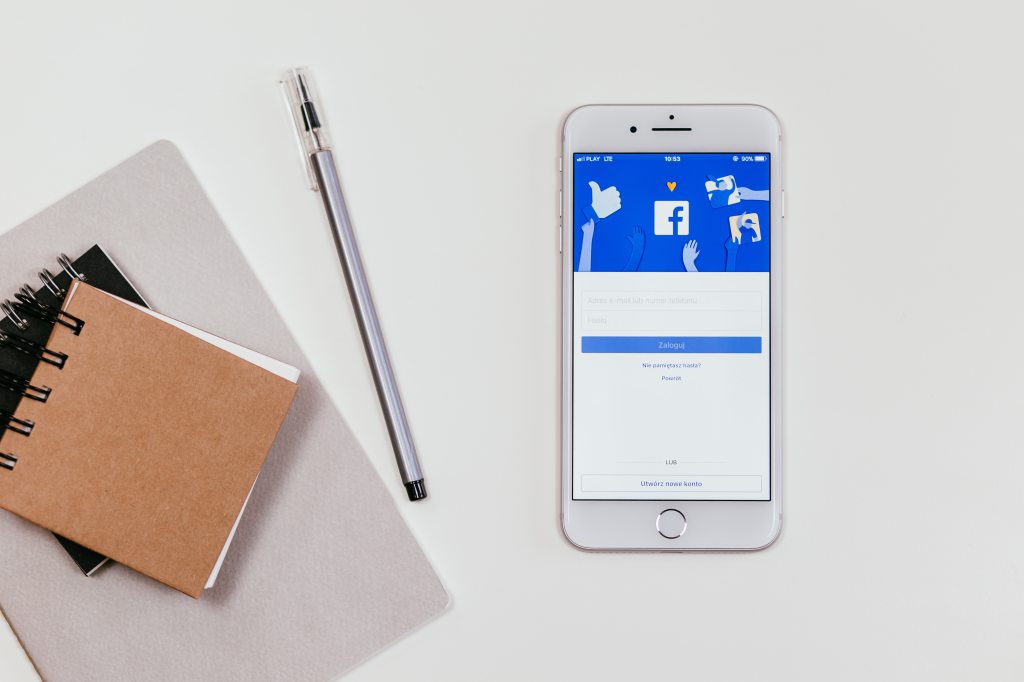
Facebook is a Choice.

Photo by freestocks.org from Pexels

With the intent of a “more open and connected world” and the mission to “give people the power to share,” Facebook was born in February of 2004. Mark Zuckerberg, notorious today, began this company as a simple guy with dreams of engaging just a few hundred people with his new software. Little did he know, the platform he had created would swiftly become one of the wealthiest companies in the world and Zuckerberg himself, one of the wealthiest men. Frontline produced a documentary in October of 2018, The Facebook Dilemma, which explains the company’s growth and shortcomings since its beginning in 2004.

Very quickly after the launch of Facebook, the amount of power contained within the site skyrocketed. People loved this new thing and they loved it fast and with fervor. Because of this instant latch from the public, Facebook’s main concern became figuring out how to get these people to stay, how to entice more people, and simultaneously, make a profit. The like button was introduced in 2009 and became a complete game changer. Now, people could express interest which provided a sense of worth to the public and a sense of what people are attracted to, for the company. Soon, Facebook realized that by noting people’s activity toward certain things, they could specify the content they show. Eventually, this led to the targeting of ads. Facebook kept track of the tendencies and interests of its users and in turn, gave this information to ad companies which then sent out tailored ads that would be right up the ally of its viewer. Suddenly, this platform was a better tool for advertisers than anything that had come before. So this might all sound great: a fast growing company that people love, ad content that we want to see, information that is of interest to us. What more could we want? Privacy.

Behind all of this ad curating are stockpiles of a multitude of people’s information. Facebook tracks and holds data on what we buy, where we shop, where we live, where we drive, whether or not we have children. After storing this, they sell it to ad agencies and all of a sudden, there is profit. Personally, I find many issues with this. First of all, privacy is one of the major ideas that Facebook prides themselves on upholding when in reality, they are trying to emphasize privacy to downplay the amount of information they take. Then, Facebook is not only keeping our data, but selling it to third parties. This puts our safety in danger and begins to manipulate our lives on a scale that most of us can’t understand. The Facebook algorithm is its driving force, its enabler and it’s something that is beyond perception for a good majority of us being taken advantage of by it. Overall, Facebook has built a complex system that lures people in and keeps them wanting more all the while, taking our personal information to make money and captivate us even further.

I believe that upon initiation of Facebook, there was no malintent, but it’s in the progress overtime that they have lost some of my respect. Clearly, some people don’t see this invasion of privacy as an issue, and that’s okay. It’s a matter of opinion. However, some of us do mind when our information is being taken and sold. If even just one person has a problem with this, Facebook should have done something about it in the beginning. They want to please the public, but that stops when it puts their income in danger. Facebook has lost concern for people’s vulnerabilities and are solely focused on user growth and profit generation. 

I am well aware that this may be coming across as aggressive toward the site. I feel it my duty to let you know, I use Facebook almost daily. Why? You might ask. Well, they do a good job of fulfilling their mission to real in the public. I enjoy the app, I engage with it often, and I know that they abuse the information that I give. To me, it was eye-opening to watch this documentary and be enlightened on exactly what is going on behind the scenes. I was aware of it before, and now I feel like I have a better grip on the situation. From this, I have established some plans moving forward. My first goal is to stay aware, I need to keep in mind this newfound knowledge. Additionally, I should be wary of the information that I willingly give away. I should be careful of the ads I interact with and I should be modest when using the platform. Above all, I need to remember that it is my choice to keep engaging with the app and one day, there may be real consequences. 

Design a site like this with WordPress.com
Get started